From observer to worker, a story of how one CRNA trained her replacement
DOVER-FOXCROFT — When someone is asked about who inspired them to join the medical field, you will often hear them say that it was a doctor, nurse or paramedic who was kind to them on the worst day of their life. For Devon Brooks, a Certified Registered Nurse Anesthetist at Northern Light Mayo Hospital, his inspiration came from his mother Karen Dow, who was also a CRNA at Mayo Hospital.
“Before outpatient procedures were more common, a lot of procedures that required anesthesia required an overnight stay in the hospital. So, my mom would have to go around and meet with patients post procedure, and I would go with her on the weekends. The hospital essentially became my second home. I knew the nurses and providers well. I would spend a lot of time on the floor with them and my mom,†he said.
“When Devon was three or four years old, I would bring him with me post-call because I didn’t have any assignments. There was a child in a wheelchair in the hospital that I would push him in, and he would go with me making rounds, seeing my post-op patients. He would hold charts in his lap and chat with the patients and my colleagues. The patients and staff loved having him around,†she said.Â
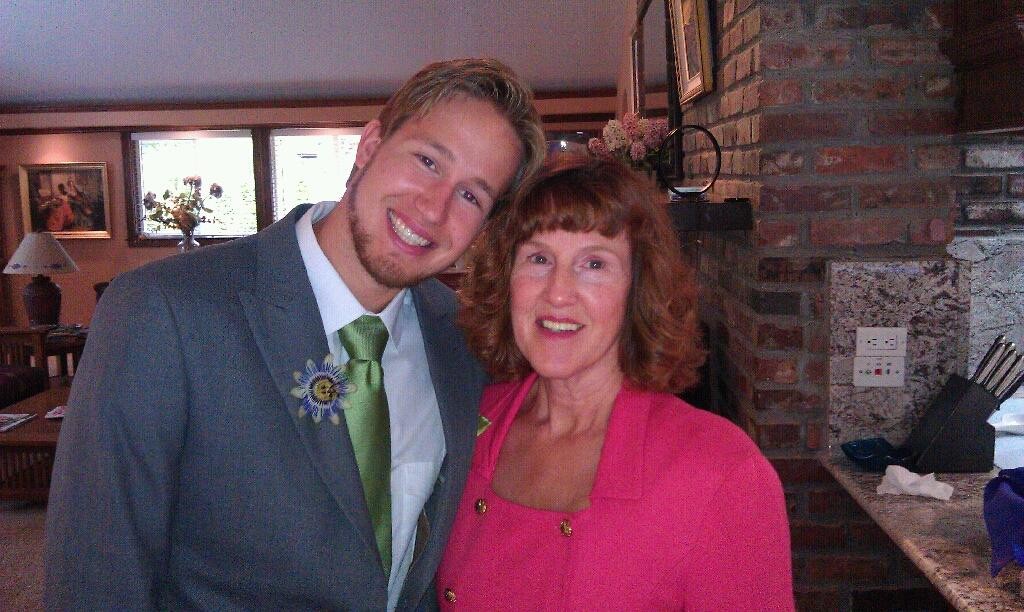
MOTHER-SON — Northern Light Mayo Hospital Certified Registered Nurse Anesthetist Devon Brooks, who followed in his mother Karen Dow’s footsteps.
While Devon got to see his mom with patients in a hospital setting, he also got to see her in action in Nicaragua when he went down with her and several of her coworkers on a mission trip.
“When I was 17, I went on a mission trip down to Nicaragua to bring expired medical products to help the community down there. During my time there, I was able to scrub in on a surgery, and I watched as my mom was giving anesthesia to patients and how important of a role she played with patients,†he said.
“They didn’t have modern technology like we did, so I was very grateful for my training. You see, when I was trained, we didn’t have all the equipment that we do today, so I had to assess my patient based on their temperature, skin color, and vitals to determine what they needed. While there, I had to hand ventilate my patients, the anesthesia machine was from the 1950s and the oxygen supply was extremely limited, as were most supplies. I did a lot of improvising and a lot of praying. Being in Nicaragua was like a step back in time for me,†she said
Brooks says that the turning point in his decision to become a CRNA was when he was allowed to help patients while he was in Nicaragua.
“One procedure that really stuck with me was a woman who had an infected open wound. She couldn’t go under general anesthesia, so I watched as my mom gave her some sedation to keep her calm while they cleaned her wound,†he said.
“This woman was in quite a bit of pain. Devon held her hand while I was finishing up an assignment. He was her only source of comfort,†she said. “He kept telling her ‘Don’t worry, my mom will be in here soon to help you.’ Once I got there, I was able to give her some sedation to help with her pain. Devon told me afterwards, that he wanted to help take the pain away from people and become a CRNA.â€
By the time his senior year of high school came, Devon started his journey to becoming a CRNA. “I applied to nursing school, became a nurse, worked in critical care and then applied and got accepted into anesthesiology school,†he said. “Once I completed that, I decided to move down to New Hampshire to work some, and then after several years, I decided to come back home. I noticed that Northern Light Mayo Hospital had some openings. Mom was retiring, so she handed the baton off to me. I started working on a Monday, and my mom retired that Thursday.â€
“Devon did part of his anesthesiology preceptorship here. He worked under my colleagues, and they all commented on how warm, kind, and personable he is. When I decided to retire, he replaced me. I quite literally raised my replacement. I couldn’t be prouder of him,†she said.
Devon has been a CRNA at Mayo for the last six years and his mother was a CRNA for 36 years before her retirement. “This community is my home. My parents still live here. My brother is close by in another town. I just love the small community feel. I love seeing people who I know from my childhood, church, or from school who come in for procedure. I love having that connection with them,†he said.